Guide to choosing a hydraulic pump: common mistakes to avoid
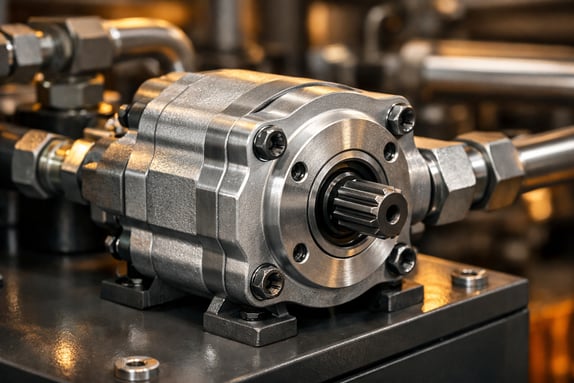
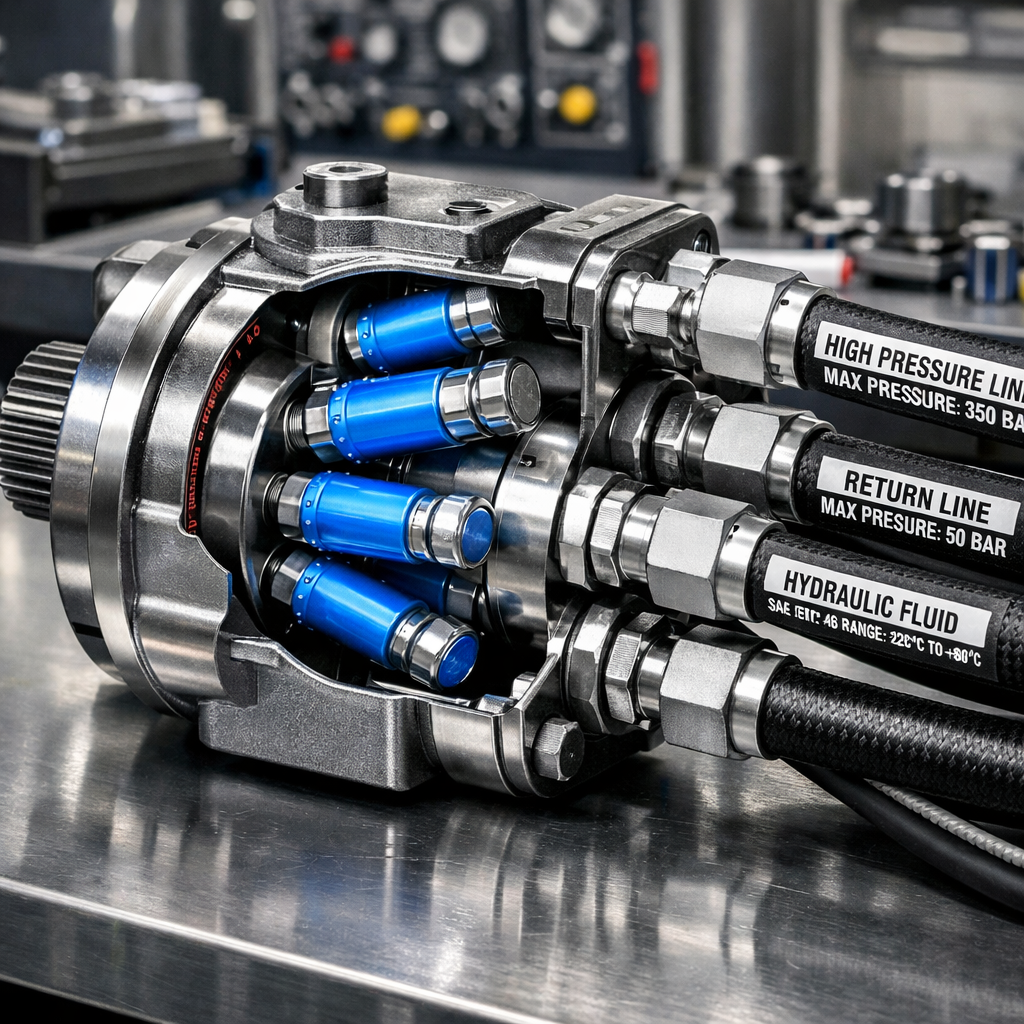
The hydraulic pump is the heart of every hydraulic circuit: it converts mechanical energy into hydraulic energy, generating the flow and pressure needed for the operation of actuators, valves and motors. A correct choice ensures efficiency, reliability and system longevity; on the contrary, a wrong selection leads to high consumption, premature failures and unexpected maintenance costs.
In this article we look at how to choose a hydraulic pump, analyzing the most important selection criteria and the 5 mistakes to avoid.
Main types of hydraulic pumps
Several types of pumps exist on the market, each with specific characteristics. Without going into too much detail (which we covered in a dedicated article), we can distinguish:
-
Gear pumps: simple, robust, economical; suitable for medium-low pressures (up to 250 bar). They represent the most widespread choice for standard industrial applications. Among the leading manufacturers are Casappa, Marzocchi and Eckerle.
-
Vane pumps: quiet, with decent efficiency; ideal for industrial applications requiring low noise and medium-low pressures (up to 280 bar). For vane pumps, brands such as Berarma, Veljan and Atos offer both fixed and variable flow solutions, with ranges designed for industrial applications and presses.
-
Piston pumps: available in axial or radial versions, they reach high pressures (400+ bar), high efficiency. Used in complex systems and hydrostatic transmissions. Manufacturers such as Bosch Rexroth, Parker Hannifin and Kawasaki offer complete ranges of axial piston pumps.
Another fundamental distinction concerns the displacement: fixed displacement pumps deliver a constant flow, while variable displacement pumps allow flow modulation according to needs, with significant advantages in terms of energy efficiency.
On the portal fluid-hub you can find all the main types of hydraulic pumps, ready to be compared based on performance and availability.
How to choose a hydraulic pump: key criteria
Operating pressure
The first parameter to define is the maximum working pressure. Each application requires a safety margin with respect to peak pressures: an undersized pump leads to premature failures, while an oversized one increases costs and complexity without real benefits.
As a practical rule, it is advisable to allow a margin of 10-20% above the maximum pressure expected in the cycle.
Required flow rate
Flow rate determines the speed of actuators. To calculate it correctly, you need to consider:
- actuator volume (cylinders, motors)
- speed required by the cycle
- pressure drops in the circuit
An accurate analysis of the work cycle allows identifying the optimal flow rate, avoiding both performance shortfalls and excessive consumption.
Efficiency and performance
Hydraulic pumps are not ideal: mechanical and volumetric losses occur. The volumetric efficiency indicates how much actual flow is obtained compared to the theoretical one; the mechanical efficiency measures losses due to internal friction.
Choosing pumps with high efficiency means reducing energy consumption, containing oil heating and improving the overall system lifespan. An aspect that is even more relevant today in light of the sector's growing commitment to sustainability in hydraulics.
Hydraulic fluid and viscosity
The fluid is an integral part of the system, not a secondary element. Viscosity must be compatible with the operating range of the pump:
- too high → generates mechanical losses and suction problems
- too low → reduces internal lubrication and increases leakage
The optimal range for most pumps is between 16 and 100 cSt, as indicated by the ISO 3448 standard on viscosity classification. Temperature and chemical compatibility with seals and materials are also determining factors.
Work cycle and environmental conditions
A system operating 24/7 in a harsh environment (steelmaking, construction, offshore) requires more robust pumps compared to a system with short and intermittent cycles.
Environmental factors such as dust, vibrations, thermal shocks or the presence of aggressive fluids must be evaluated, and appropriate materials and protections chosen accordingly.
The 5 common mistakes to avoid when choosing a hydraulic pump
Knowing the criteria is essential, but learning from the most common mistakes is what truly makes the difference between a reliable system and one that creates continuous problems.
1. Incorrect sizing
This is the most frequent mistake. A pump that is too small does not reach the required flow rate, slows down actuators and leads to overheating. One that is too large consumes more energy than necessary and generates unwanted vibrations.
How to avoid it: base the selection on an accurate calculation of the complete work cycle, not just on flow peaks.
2. Ignoring pressure drops
Even a well-designed circuit can lose efficiency if the piping is too long, with many bends or incorrectly sized filters. The result? The actual flow at the pump output does not match the calculated one.
How to avoid it: calculate the pressure drops of the entire circuit and increase the pressure required from the pump accordingly.
3. Inadequate fluid choice
Using oil with incorrect viscosity or incompatible with materials leads to cavitation, premature wear and efficiency drops. According to industry studies, fluid contamination is responsible for 70-80% of failures in hydraulic systems.
How to avoid it: follow the manufacturer's recommendations, monitor viscosity and provide an filtration system adequate.
4. Neglecting preventive maintenance
Contaminated oil or clogged filters are among the primary causes of failure, yet they are easily avoidable with a plan of periodic checks. Relying only on reactive maintenance (intervening after a failure has occurred) is the riskiest and most expensive strategy.
How to avoid it: schedule periodic checks, filter replacement and oil analysis. Consider predictive approaches where possible.
5. Not considering integration with other components
A pump may be perfect on paper, but if it does not communicate correctly with valves, accumulators and motors, the system becomes unstable and inefficient. Excessive pulsations, pressure instability and malfunctions are often the result of a compartmentalized design approach.
How to avoid it: design the circuit as an integrated system, verifying the compatibility of dynamic characteristics among all components. For more information on how to design the complete circuit, see our guide on how to build a hydraulic power unit.
Quick checklist for choosing the right hydraulic pump
|
Step |
What to do |
Why it matters |
|
1 |
Define maximum and peak pressure |
Prevents premature failures |
|
2 |
Calculate flow rate required by actuators |
Ensures performance |
|
3 |
Choose fixed or variable displacement |
Optimizes costs and efficiency |
|
4 |
Verify viscosity and fluid compatibility |
Protects pump and circuit |
|
5 |
Consider work cycle and operating environment |
Increases lifespan |
|
6 |
Analyze pressure drops |
Reduces waste and overheating |
|
7 |
Plan preventive maintenance |
Maintains reliability over time |
|
8 |
Check integration with other components |
Prevents system malfunctions |
Choose methodically, avoid problems
Pressure, flow, fluid, maintenance, integration: these are the factors that determine the success or failure of a hydraulic system. There are no shortcuts, but a methodical approach reduces risks and extends the useful life of every component.
On fluid-hub you can find hydraulic pumps from the best brands, with complete technical data sheets and selection support. If you have doubts about your choice, our technical team is available.
Sources and bibliography:
- ISO 4406:2021 - Hydraulic fluid power — Fluids — Method for coding the level of contamination by solid particles
- ISO 3448:1992 - Industrial liquid lubricants — ISO viscosity classification
- ISO 1219-1:2012 - Fluid power systems and components — Graphical symbols and circuit diagrams
- Fluid Power Journal
Related articles
Connecting hydraulic directional valves: diagrams, mistakes to avoid and practical tips
Apr 24, 2026
How to build a hydraulic power unit: components, schematic and assembly phases
Apr 23, 2026